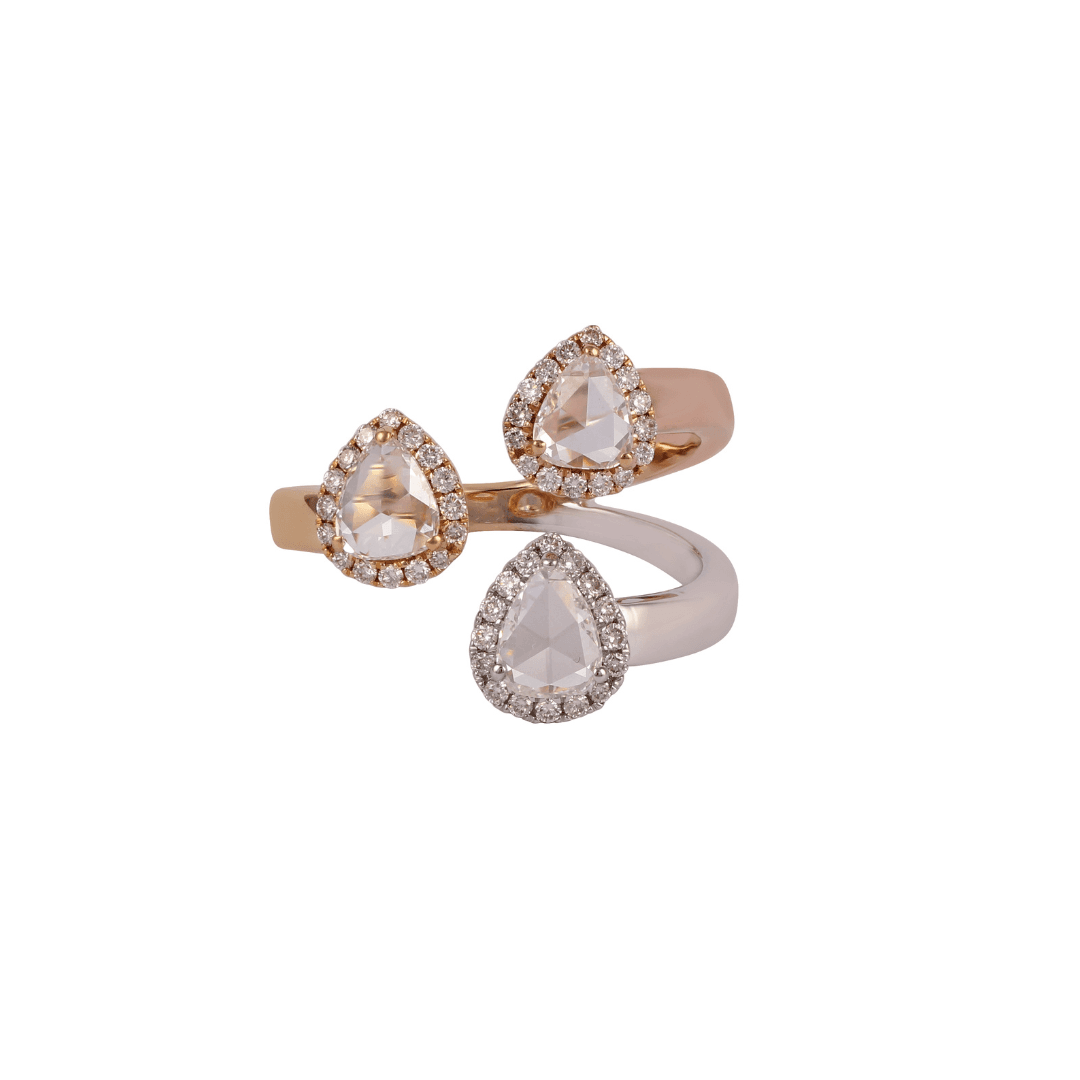
Most people are handed a grading report at the end of a purchase, glance at two lines of it, and put it in a drawer. It is more useful than that. A report is the one document in the transaction that was produced by someone with no financial interest in the outcome, and reading it properly takes about four minutes.
The Gemological Institute of America is the laboratory whose vocabulary the rest of the trade borrowed — the D-to-Z colour scale and the modern clarity scale are both theirs. Other laboratories issue perfectly good reports, and the fields below appear on most of them under slightly different names.
One point of vocabulary first: GIA calls the document a report, not a certificate, and is quite insistent about it. A certificate implies a guarantee of value. A report is a description of a stone on the day it was examined.
The header: what report this is
Report number. A unique number tied to that stone. Write it down separately from the paperwork.
Date. Grading standards are stable but not frozen, and a report from twenty years ago may describe a stone that has since been recut or damaged.
Report type. A full Diamond Grading Report carries the complete set of grades and a plotted clarity diagram. A Diamond Dossier covers smaller stones and carries the grades but a laser inscription instead of a plot. A Diamond Origin Report adds a country of origin determination. For a laboratory-grown stone the report says Laboratory-Grown Diamond across the top and the growth method is stated.
Shape and measurements
Shape and cutting style — "Round Brilliant", "Emerald Cut" and so on. Plain description.
Measurements, in millimetres. For a round: minimum diameter, maximum diameter, depth. This is the line to check against the stone you are being shown, and the line that tells you how large the stone will actually look. Two one-carat rounds can differ by half a millimetre in spread, which is visible.
Carat weight, to two decimal places. Note that weight is not size: a deep-cut stone hides weight below the girdle where nobody sees it.
The four grades
Colour, D through Z. D, E and F are colourless; G through J near-colourless; K onwards increasingly warm. The practical point is that the difference between adjacent grades is barely visible face-up in a mounted stone, and the difference between D and G is invisible to almost everyone once the stone is set in yellow gold. The scale is finer than human perception at the top end, and prices are not.
Clarity, from Flawless down through IF, VVS1 and VVS2, VS1 and VS2, SI1 and SI2, to I1, I2 and I3. Graded under ten-times magnification by a trained grader. VS2 and above is almost always "eye-clean" — you will not see an inclusion at normal viewing distance. In SI, it depends entirely on where the inclusion sits, which is what the plot on the report is for.
Cut, from Excellent to Poor, and only assigned for round brilliants. This is the grade to care about. Colour and clarity are geology; cut is a decision somebody made, and it decides whether the stone returns light or leaks it. An Excellent-cut G will out-perform a Good-cut E in every room you will ever stand in.
Polish and symmetry, also Excellent to Poor. Minor, but they feed into the cut grade.
Fluorescence, and the myth attached to it
Fluorescence is the stone's reaction to ultraviolet light, graded None, Faint, Medium, Strong or Very Strong. Roughly a third of diamonds show some.
It is priced as a defect, and for the vast majority of stones this is a market habit rather than a visual reality. Strong blue fluorescence in a warmer stone — I, J, K — can actually make it face up whiter. It causes a visible haziness in a small minority of Very Strong cases. If you are buying in the G-to-J range, a Medium or Strong fluorescent stone is often the best value on the table, and it is worth looking at rather than filtering out.
The plot, and the comments
On a full report there is a clarity plot: a diagram of the stone with each inclusion drawn in. Red marks are internal, green are surface. What you are looking for is not the number of marks but their position — an inclusion under the table sits in the middle of the stone's brightness and shows; the same inclusion under the bezel facets near the girdle may be effectively invisible once set.
The comments field is short and frequently the most important line on the page. It is where you will find "clouds are not shown", "internal graining is not shown", or a note that the stone has been laser drilled or fracture filled. Read it.
Two things a report will not tell you
What the stone is worth. No price, no valuation, by design.
Whether you will like it. A report cannot describe the thing that actually makes a stone pleasant to own — how it behaves when you move your hand under a lamp, whether the flashes are large and lazy or small and busy. Two stones with identical reports look different. This is why we would rather show you three stones side by side than argue about paperwork, and it is the whole argument for buying a diamond in a room rather than a browser.
Verify it yourself
GIA publishes a free Report Check on its own site. Enter the report number and the carat weight and the grading data appears from the laboratory's database. Do this in front of the seller before you pay, not afterwards, and check that the measurements match.
Stones large enough to carry one are laser-inscribed with the report number on the girdle. It is readable under a loupe and any jeweller can show it to you.
How we use them
Every diamond we supply above the threshold where independent grading is meaningful comes with its report, and we give you the number before the purchase rather than with the box. When a stone comes off the live RapNet feed described on our diamonds page, the report number is in the listing, which is precisely why we buy that way.
For the pavé and surround work in the Diamonds collection, individual small stones are not separately certificated — no laboratory grades a 0.01 carat melee — and what matters instead is that the stones are matched to each other for colour and cut across the whole piece. That is a workshop discipline rather than a paper one, and it is a fair question to ask about when you are looking at a ring.
Ask for the report. Read the comments line. Check the number yourself. Then look at the stone.