Diamonds
Diamonds, and how we choose them
We are a RapNet member with a live feed of certified stones, and a workshop that has been setting them in Jaipur since 1988. This page explains both halves of that.
Sourcing
Where a stone comes from before it reaches us
Jaipur is a coloured-stone city first, but every house here works with diamonds, and the trade in them runs through a small number of well-established channels. We buy through RapNet — the Rapaport Group's trading network, the largest diamond marketplace in the industry — and through dealers in Mumbai and Surat with whom the family has worked for years.
RapNet membership matters for a practical reason rather than a romantic one. Listings on it are tied to a seller's verified account and, for the great majority of stones, to a laboratory report number that can be checked independently. It means we can put a specific stone in front of you, with its report, before anyone has committed to anything.
Rough origin is a separate question from where a stone was traded, and we are careful about the difference. Every stone we buy is represented to us as conflict-free under the Kimberley Process, which is the warranty the trade runs on. We are not going to describe that as a guarantee of a mine, because it is not one.
Grading
What we look at, in what order
The four Cs are a vocabulary rather than a ranking. In practice, for the pieces we make, the order we work in is cut, then colour, then clarity, then carat weight — because cut is the only one of the four that is entirely a human decision, and it is the one that decides whether a stone looks alive on a hand.
A well-cut stone half a grade lower in colour will out-perform a poorly cut stone half a grade higher, in every light a person actually wears jewellery in. We would rather show you both side by side than argue the point on paper.
For coloured-stone pieces where diamonds are the surround rather than the subject, we match for consistency of colour and cut across the whole piece before we optimise any single stone. A pavé line where one stone reads warmer than its neighbours is a fault you will see forever.
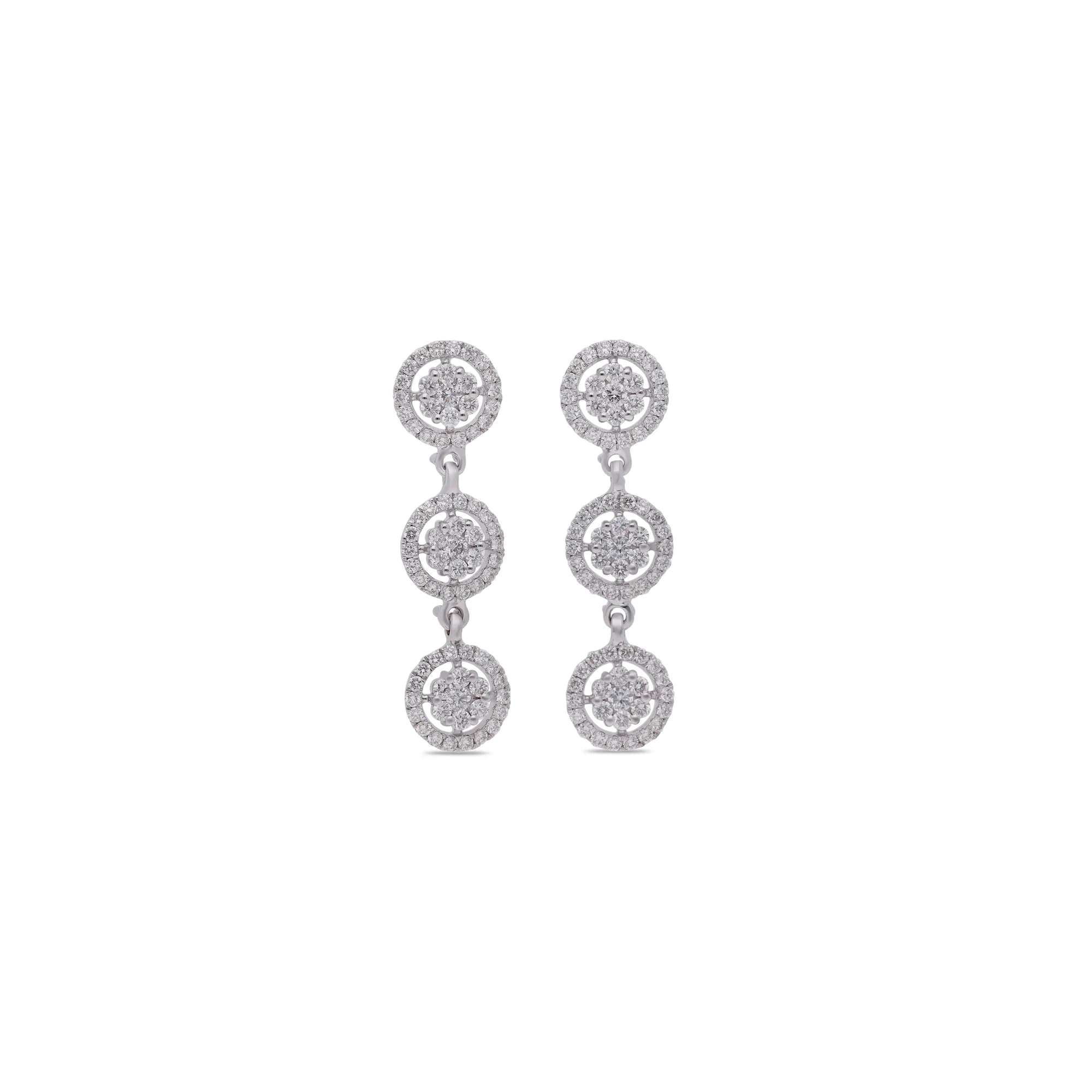
You can see that work in the Diamonds collection and across our rings.
Certification
What comes with the stone
Any diamond above the threshold at which independent grading is meaningful is supplied with a laboratory report — most often GIA or IGI, occasionally another recognised laboratory where a stone arrives already graded. The report is issued for that stone, not for the finished piece, and it stays with it.
A report gives you the measurements, the proportions, the colour and clarity grades, the fluorescence, and, for round brilliants, cut, polish and symmetry grades. It does not give you a valuation and it does not give you a price. Anyone who tells you a certificate sets a price is selling you the certificate.
Report numbers can be verified on the issuing laboratory's own site. We will give you the number before you buy, not after, and you are welcome to check it in front of us.
Buying
How this usually goes
- 01
Tell us the shape, the approximate weight and the setting you have in mind, or bring a piece you already own.
- 02
We search the live feed and our own stock, and come back with a short list rather than a catalogue — usually three to five stones with their reports.
- 03
You see the stones, in the showroom or over video, in daylight and under warm light.
- 04
We quote the stone and the making separately, so you can see what you are paying for.
- 05
The piece is made in our own atelier, and the report goes with it.
Live inventory
Search the RapNet feed
Our RapNet Instant Inventory search loads on request — it is a third-party tool and we would rather not load it into everyone's browser by default. It searches live listings by shape, weight, colour, clarity and cut.
Search results come from RapNet and are supplied by third-party sellers. A stone shown here is available at the time of searching and is not held for you until we confirm it.
Where can I buy a certified diamond in Jaipur?
Gem Plaza sells certified diamonds from its showroom on M.I. Road, Jaipur, and is a RapNet member with a live searchable inventory on its site. Stones are supplied with a laboratory report, most often GIA or IGI, whose number you can verify on the laboratory's own site, and they can be set in the house's own atelier.